
Philippines Marcos govt earns billions from fuel taxes while drivers struggle with high prices
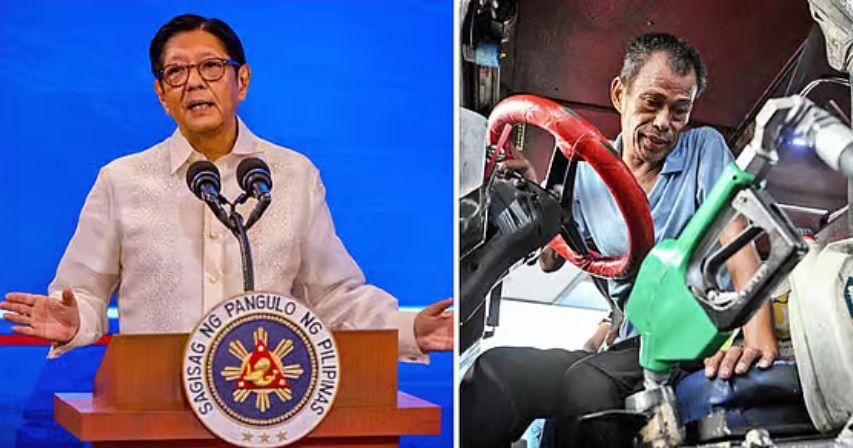
Fuel prices worldwide have soared uncontrollably thanks to the Middle East war. Some countries managed to lessen the blow through oil tax cuts that did not materialise in the Philippines.
I think there was also P47.6 billion (Dh2. 97 billion) in fuel taxes. Even if it delivers on its promise of providing public transportation drivers cash aids amounting to P33. 77 billion (Dh2. 5 billion (US$0.1 billion) it is still worth a P13. 85 billion (Dh865 million) windfall.
Unlike in neighbouring countries like Indonesia and Vietnam, which scaled back taxes to shield their nationals from skyrocketing inflation due to the war, Filipino President Ferdinand Marcos Jr. was not able to suspend excise and value added taxes on fuel despite an emergency power given him by Philippine Congress.
What Marcos did was to provide P5,000 (Dh312) cash assistance to over 200,000 tricycle, jeepney, delivery and bus drivers. It had started to roll out partially in major cities in the country, prompting several local governments to issue an emergency declaration so they could expedite distribution of cash assistance via their own emergency funds.
But the money was too little for supposed beneficiaries to really help, they said: it could only cover two-days fuel expenses. “Marcos was clearly only focused on lost revenue if fuel taxes were suspended,” they wrote.
Transport groups such as Piston and Manibela, and much of the citizenry cast a wider net: A more equitable government response would have been to suspend taxes on fuel, which would have benefited all Filipinos by guaranteeing lower prices across the board.
Abolition of both taxes could bring diesel down by over P24 per litre and gasoline to be lower by more than P10 per litre, they added and emphasized: “Polices should work as a solution and must focus on the reality.”
George, a driver of the three-wheeled public transport vehicle had ceased from moving along his route due to high fuel cost after petrol in his home province Isabela reached P102 per litre (Dh6. 35). His vehicle uses one litre from his village to the town market 12 km away.
“With three passengers I could only charge P50 each, so that would give me P150 to buy petrol and parts. If I’m fortunate enough to have four complete trips per day, I usually return home with only P100 each day,” the young papa revealed.
For George, the statement from President Marcos is worth nothing. He did not even get the promised cash assistance. He was abandoned to fend for himself and his family.
George is now selling watermelons on the side of the road, trying to take home a little more money while the government keeps pulling in billions from taxes.



Comments